Commercial Water Restoration in Anson, IN
Offices, shops, schools and churches in Anson dried to documented readings, on a schedule built around your calendar.
Anson Water Restoration delivers Commercial Water Restoration across Anson and surrounding areas with certified crews available 24/7 and every step documented for insurance. Call (765) 703-7292.
- Service: Commercial Water Restoration for Anson homeowners
- Service area: Anson, IN and surrounding areas
- Response time: Emergency calls from Anson dispatched immediately, day or night
- Licensed and insured (License #RC21100059)
- Serving Anson, IN since 2018
Commercial Water Damage Restoration in Anson
We extract water and dry commercial buildings across Anson, and we're available around the clock.
Site Conditions
Freeze and thaw cycles each winter can burst pipes in unheated parts of a commercial building. Your building's own drains and roof get checked on the first walkthrough with whoever manages the property.
We cover commercial properties across Anson, including the area around Whitestown Parkway and Albert S. White Boulevard. We also handle commercial water losses in Traders Point, Lebanon, Zionsville and Whitestown.
Commercial Water Restoration for Anson Businesses
Residents start asking about the brown stain spreading across the third floor corridor ceiling, and the leasing office is still working out where it came from. Common areas in an apartment building share risers and mechanical closets, so a stain can trace back to several places. Anson Water Restoration traces the water for Anson property managers and records every area it reached.
Anson Water Restoration documents a commercial water loss in Anson by suite and by common area from the first walkthrough. Photos, moisture readings and the scope get split the way a lease and a building file need them. Ownership, tenants and your carrier can all read the same record, and you decide who gets which part of it.
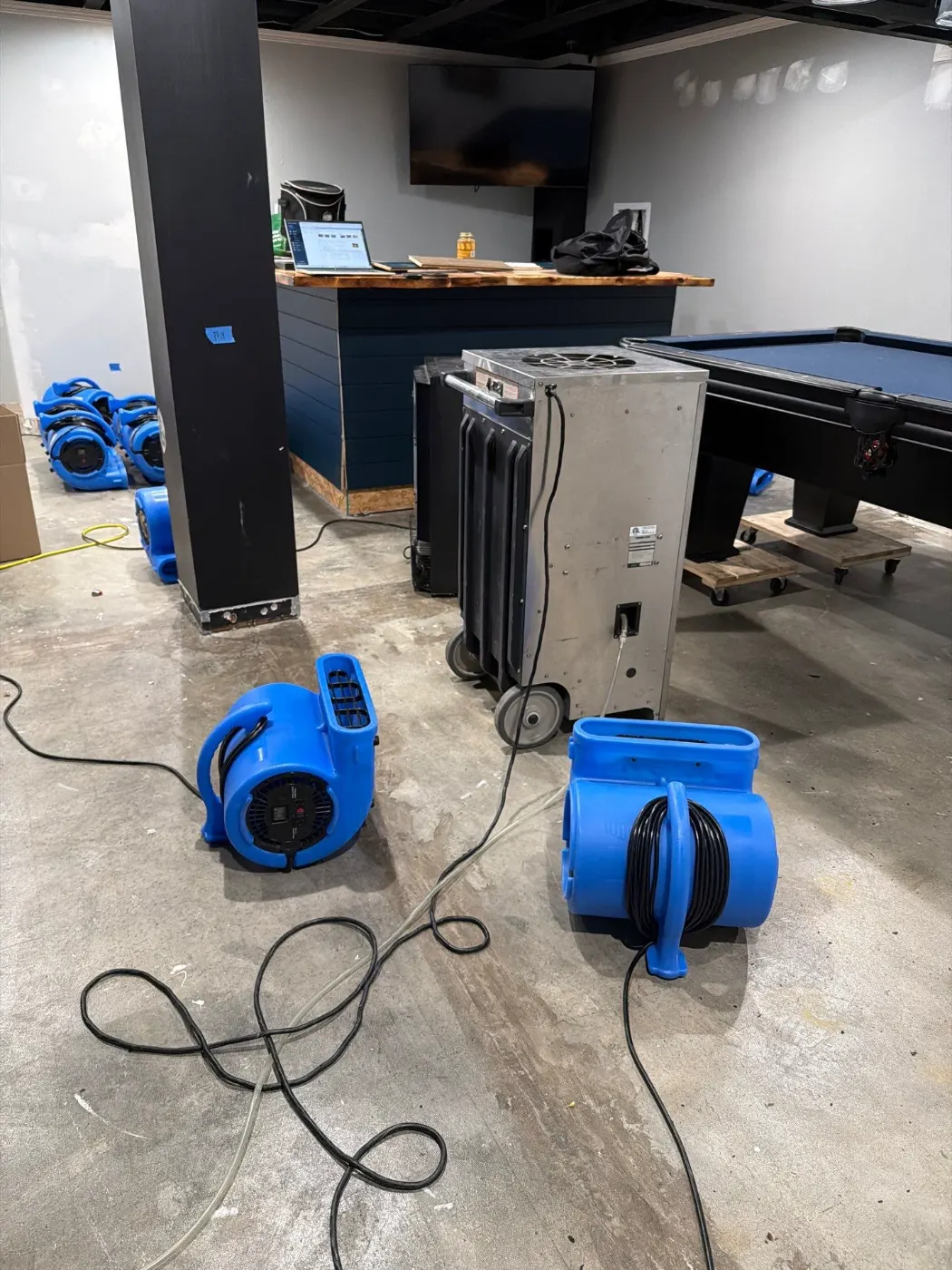
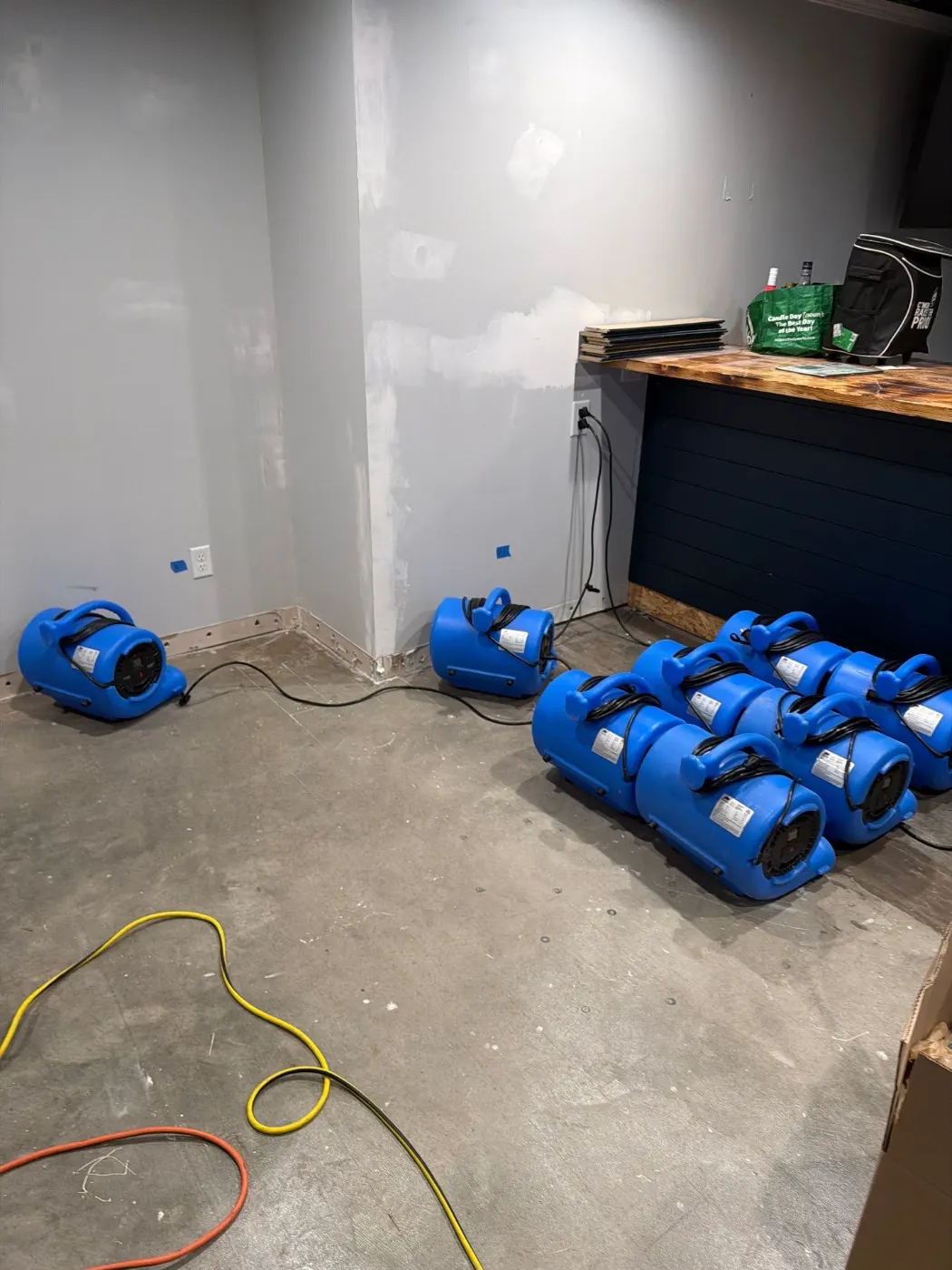
Drying design on commercial square footage comes from measurements, like the affected cubic footage, the materials and how much moisture the equipment can pull from the air. Anson Water Restoration crews size dehumidification to those numbers, duct dry air into closed spaces and set air movers to keep air moving across wet surfaces. The calculation goes in the file and gets revised as readings change.
Condition before the loss is worth recording early on a commercial job. Crews photograph finishes, flooring type, ceiling condition and contents before any demolition, and note existing damage that has nothing to do with this loss. Anson Water Restoration keeps those photos in the same file as the moisture map, and your own property condition records sit well beside them.
Your carrier is going to want readings, photographs and an itemized scope. Anson Water Restoration builds all of that while the drying runs. Call for a commercial water loss anywhere in Anson, IN and a crew dispatches within 2 hours, with the file started the same day.
Signs You Need Commercial Water Restoration
If you notice any of these in your Anson building, schedule a free inspection before the issue worsens.
Water running down stairwell treads or collecting on a landing below an upper floor
Standpipe or sprinkler system testing that left water on a floor with no drain
Brown stains forming on ceiling tiles beneath a roof drain location after a storm
Carpet in the sanctuary or fellowship hall squishing underfoot after a weekend storm
Cove base pulling away from gypsum board along a corridor or exterior wall
Condensate overflowing from an air handler pan onto the mechanical room floor
Ceiling tiles on the break room floor Monday morning with wet carpet tile beneath them
Drips from a ceiling mounted fan coil unit or a variable air volume box
Carpet tile edges curling or lifting where the adhesive underneath has released
Chilled water pipe insulation dripping onto the ceiling tiles below it
How Anson Water Restoration Handles Commercial Water Restoration
We follow these steps in order on every Anson job.
Contents and Furniture Protection
Furniture and fixtures get labeled by room and photographed in place, then blocked up or moved to dry staging in the order the zones open. The inventory travels with the job file alongside the readings.
Structural Drying Design
Dehumidification gets sized from affected cubic footage and material porosity, with dry air ducted into ceiling plenums, wall cavities and shafts. Air movers get placed to keep surface air moving, and the calculation gets revised as readings change.
Daily Monitoring and Reporting
A technician reads the same locations every 24 hours, logs them against unaffected baseline readings taken elsewhere in the building, and repositions equipment as the wet zones shrink. The day's numbers go to your management office.
Tenant Notices and Updates
Plain language notices go out to the tenants in your Anson building saying which areas are affected and when crews will be in the space. Updates follow as the readings change, with a contact name for questions.
Clearance Verification
Previously wet materials get read against dry standard readings from the same materials in an unaffected part of the building. Equipment comes off the floor once those numbers are documented, and containment comes down after that.
Commercial Water Restoration in Anson
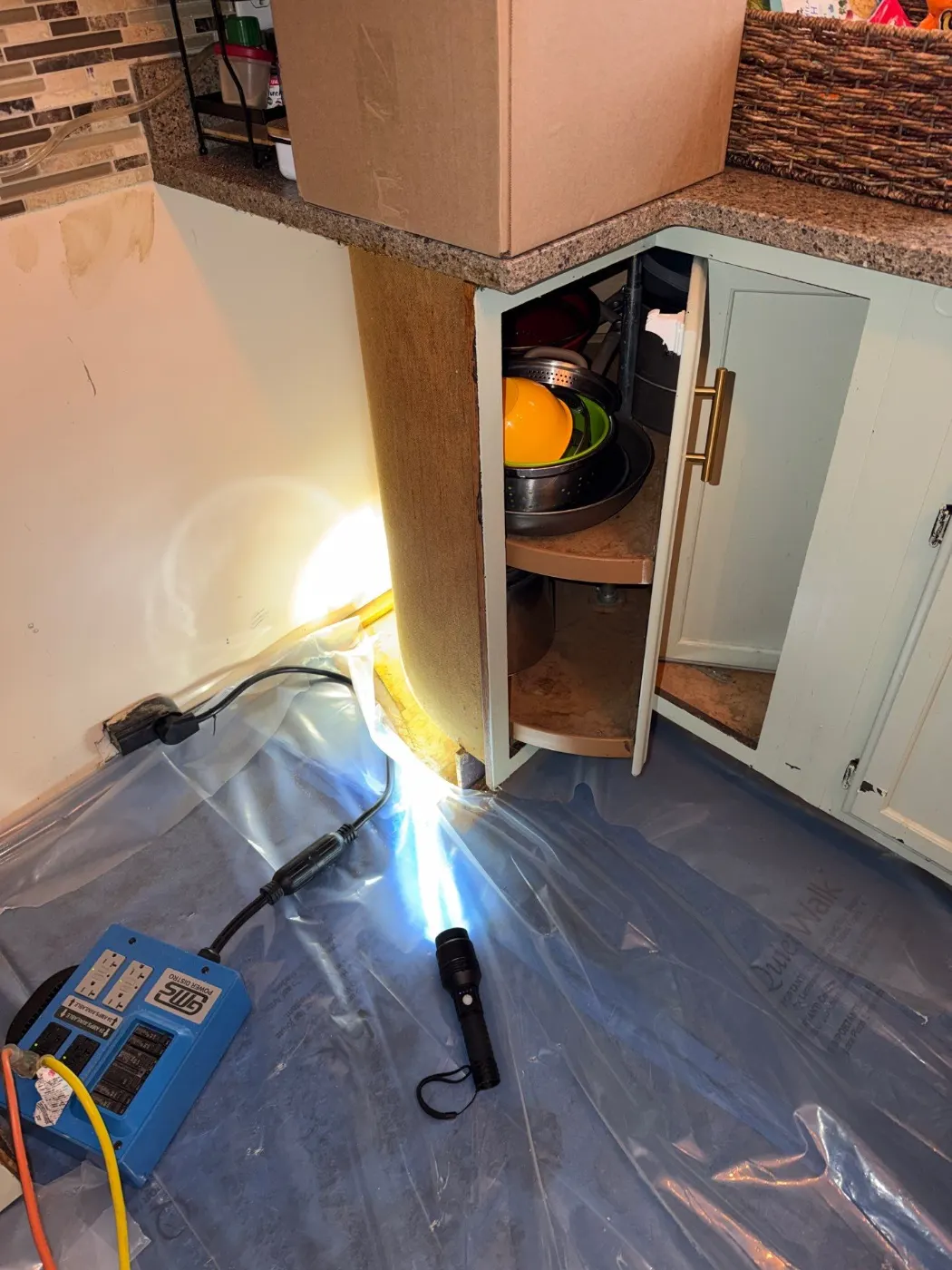
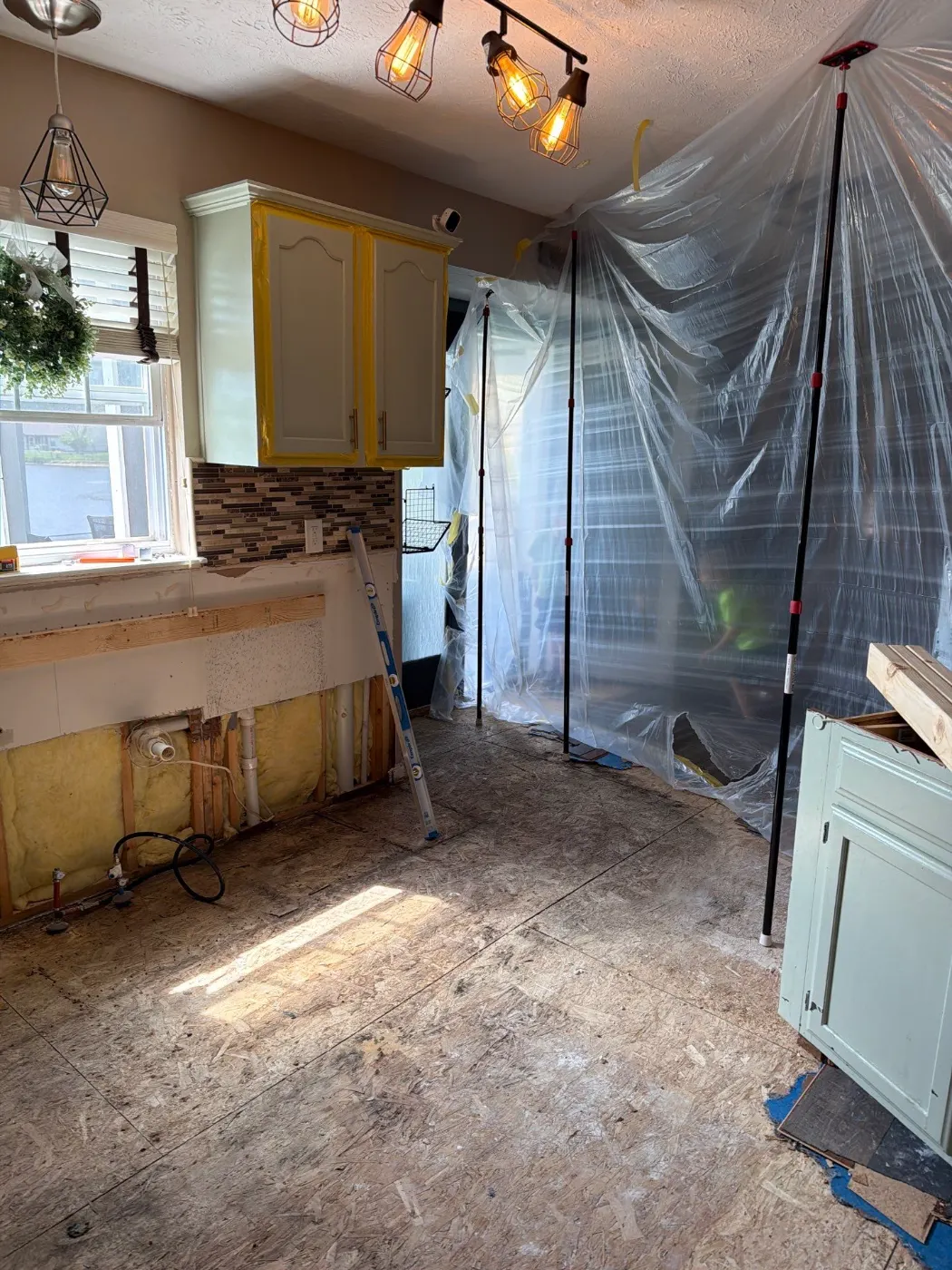
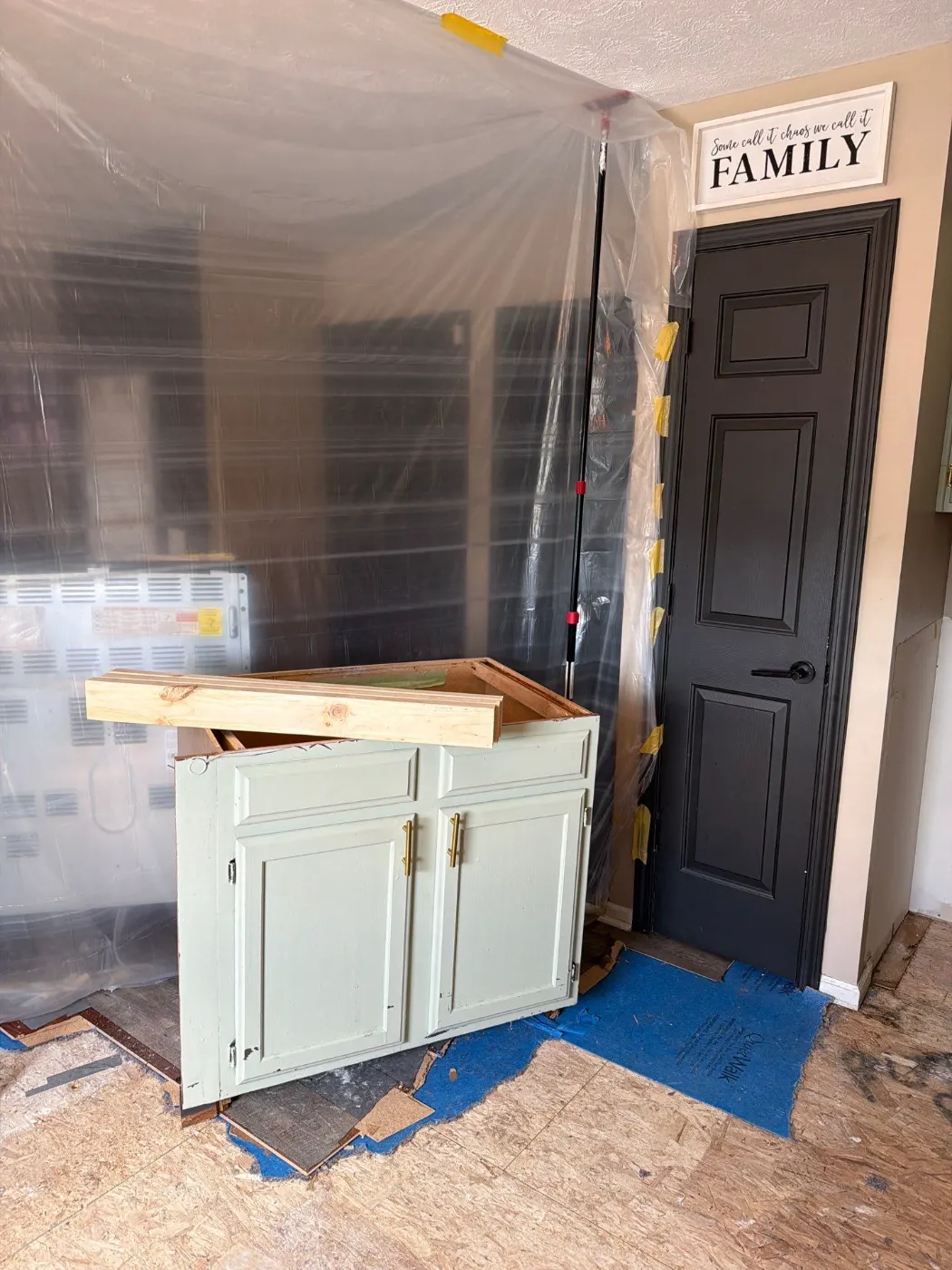
Photographs from real commercial water restoration jobs completed by our crew in Anson and surrounding areas.
Commercial Water Restoration FAQ
Questions Anson property managers ask us about commercial water restoration.
Guidance and Standards for Commercial Water Restoration
- The ANSI/IICRC S500 is the published standard for professional water damage restoration. The current edition is the Fifth Edition, 2021. IICRC S500 Standard
- EPA advises drying water damaged areas and items within 24 to 48 hours to prevent mold growth. EPA: A Brief Guide to Mold, Moisture and Your Home
Anson Neighborhoods We Serve
We take commercial water restoration calls in every part of Anson. Pick your neighborhood for local details.
Other Restoration Services in Anson
Anson Water Restoration handles the full scope of restoration work. Explore our other services below.
Water Damage Restoration in Anson
24/7 emergency response. IICRC certified water restoration from extraction to full dry out.
Learn more →Basement Flooding in Anson
Basement water emergencies handled fast. Extraction, drying, mold prevention.
Learn more →Sewage Cleanup in Anson
Category 3 biohazard cleanup. Full containment, decontamination, structural restoration.
Learn more →Request Commercial Water Restoration
Reach Us Directly
Our team is available 24/7 for emergencies and ready to schedule inspections during business hours.
Need Immediate Help?
For active water or mold emergencies, call us directly. We are available 24/7.