Problem: You Cannot See Where the Water Actually Went
Water follows gravity, then capillary action, then any path of least resistance it can find. A leak at the dishwasher can run along the floor joist and show up as a stain in the basement ceiling fifteen feet away. By the time you notice the symptom, the moisture has already soaked into framing, insulation, and subfloor in places you would never think to check. Tearing into drywall blindly causes unnecessary damage and still misses pockets.
Solution: Thermal Imaging Reveals the Real Footprint
A thermal camera does not see water directly. It sees temperature. Wet materials evaporate, and evaporation cools the surface, so wet drywall reads colder than dry drywall next to it. That contrast shows up clearly on the camera screen as a darker shape with defined edges. We scan walls, ceilings, floors, and cabinet interiors to outline the affected area before we cut anything. Then we confirm with a pin or pinless moisture meter so we are not chasing a cold spot caused by an air leak or a stud. This two tool approach is the same method described in our breakdown of signs of hidden water damage in your home, and it is how we keep demolition limited to what is actually wet.
Camera settings matter as much as the camera itself. We adjust the temperature span on the display so small differences (sometimes only one or two degrees) stand out clearly. Running the HVAC for a few minutes before scanning also helps, because it widens the gap between wet and dry surfaces and makes the wet footprint pop. When a Anson homeowner calls Anson Water Restoration and we arrive within 2 hours, the first thing the tech does is establish those baseline conditions so the images we capture are actually useful.
Problem: Wet Materials Hidden Behind Walls Grow Mold Fast
The 48 hour window matters. Once organic materials like drywall paper, wood framing, and cellulose insulation stay damp past that point, mold colonies start to establish. You will not see them at first because they are growing inside the wall cavity. A few weeks later you start smelling that earthy, musty odor or noticing discoloration bleeding through paint. At that point you are no longer looking at a drying job, you are looking at remediation.
Solution: Final Verification Scans and Written Sign-Off
Before we pull the last air mover, we run a full thermal sweep of every room we worked in and confirm with meter readings at the same points we logged on day one. Those final numbers go into your file alongside the start readings, so you can see the moisture content dropped to dry standard. If anything is borderline, we leave equipment in place another day rather than calling it done. That habit is what protects you from callbacks, and it is the standard Anson Water Restoration brings to every job in Anson.
Problem: Homeowners Cannot Tell If the Dry-Out Actually Worked
Once the equipment comes down and the walls look normal again, it is hard to know if the job was complete. Paint hides a lot. A spot that reads fine on the surface can still be holding moisture two inches into the framing, and the only way to know is to put instruments on it.
Solution: Targeted Thermal Scans and Honest Recommendations
Thermal imaging picks up hot water lines glowing through flooring and cold lines reading as faint stripes when they are leaking. Combined with pressure testing and meter verification, we can narrow a slab leak to a tight area before the plumber breaks concrete. For tile walls, we scan from the back side wherever possible to avoid cutting finished surfaces. Our process for finding these is similar to what we describe in our article on water damage behind walls and hidden leak detection. If the scan shows the problem is minor and you can handle the dry out yourself, we will say so.
Problem: Surface Readings Lie About Subfloors and Ceilings
A floor can feel dry to the hand while the subfloor underneath is still holding 30 percent moisture. Ceilings are even sneakier. A textured ceiling may look stable while the back side of the drywall and the insulation above are saturated. If you trust your hand or your eyes, you will pull equipment too early and walk away from a problem that resurfaces in a month.
Solution: Depth Readings and Documented Dry Standards
We use pin meters that penetrate into subfloor and framing to read moisture at depth, not just the surface. Every drying job at Anson Water Restoration includes documented readings: where, when, and what the meter showed. That log goes to you and to your insurance adjuster. If you want a deeper look at how this fits into a claim, our guide on filing a water damage insurance claim walks through what carriers expect to see. Documented drying is also how you avoid a fight over whether the work was actually completed.
Solution: Map It Early, Dry It Right
When we map moisture on day one, we know exactly which cavities need airflow and which materials can stay in place. Here is the basic sequence we follow:
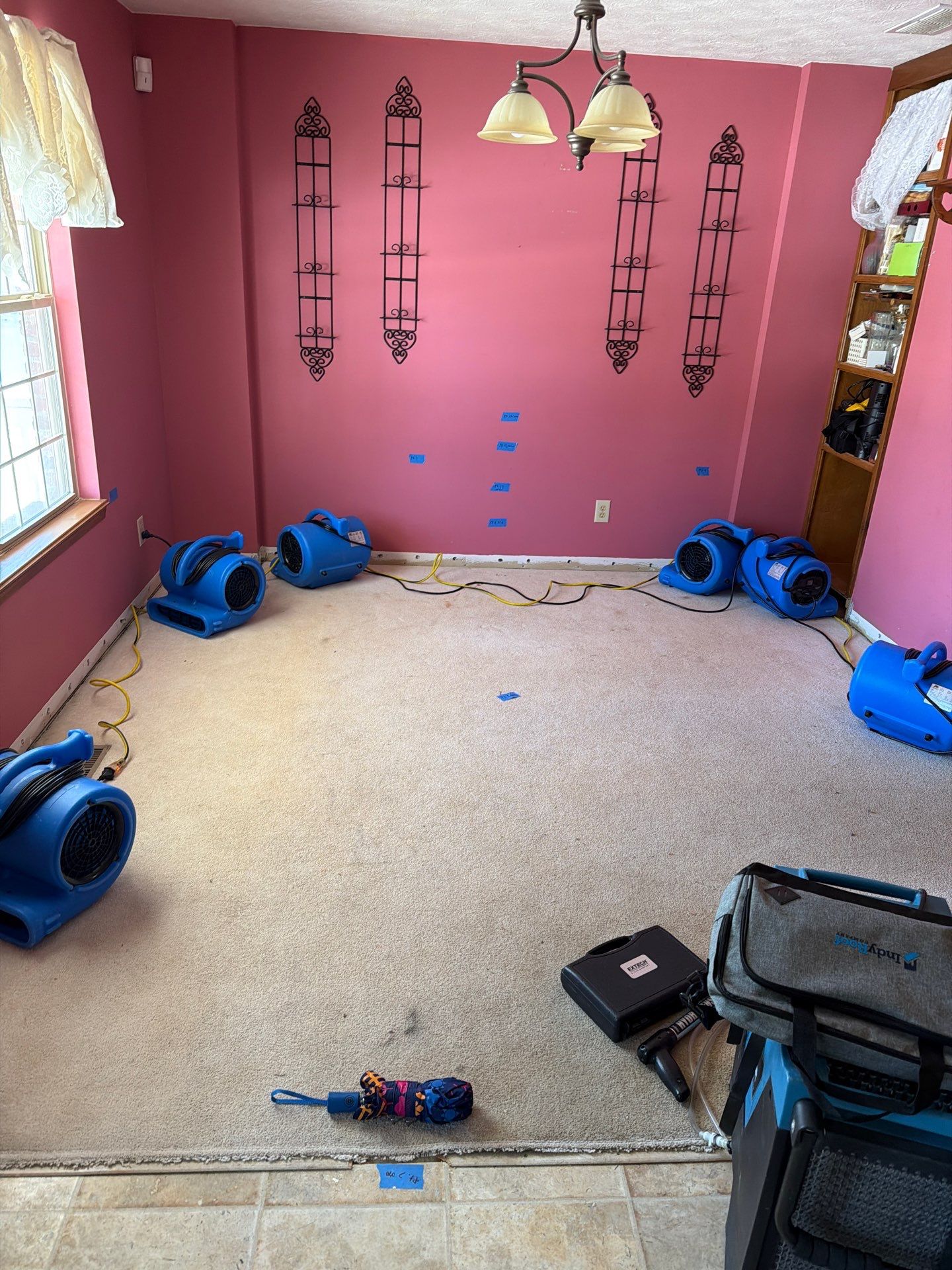
- Scan the affected rooms with thermal imaging and mark suspect zones with tape.
- Verify each marked area with a moisture meter and log readings against dry standard baselines from unaffected materials.
- Set containment, remove only what cannot be dried in place, and position air movers and dehumidifiers based on the map.
Drying that follows a map is faster and less destructive than drying by feel. We re scan every 24 hours and adjust equipment as the wet zones shrink. On a typical three room loss, that mapping discipline can mean the difference between replacing two sheets of drywall and gutting an entire wall. It also gives the homeowner a visible sense of progress, because the marked zones get smaller every day until the readings match the baseline.
Problem: Slab Leaks and Pipe Leaks Behind Tile Hide for Months
Some of the worst damage we see in Anson comes from slow leaks behind shower tile, under slab foundations, or inside chases that carry supply lines between floors. You will notice a slightly warm spot on the floor, a higher water bill, or a baseboard that keeps cupping no matter how many times it gets replaced. Without imaging, you are guessing where to cut.